

Home | BLOG | Animal Health Marketing: The Challenges & Foundational Activities that Drive Veterinary B2B Growth
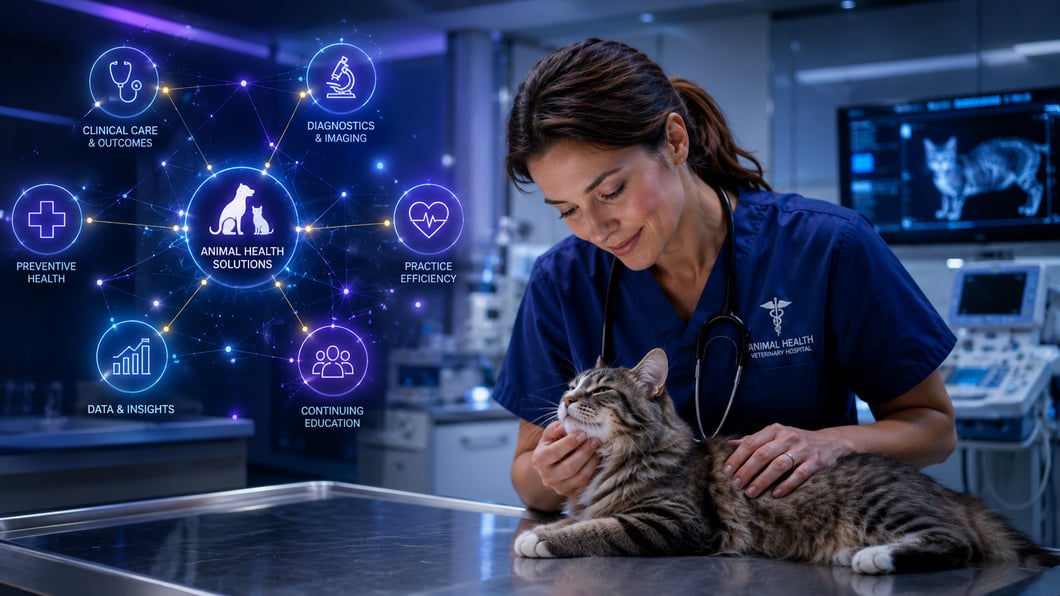


Animal Health Marketing: The Challenges & Foundational Activities that Drive Veterinary B2B Growth
Table of contents
Animal Health Marketing: The Challenges & Foundational Activities that Drive Veterinary B2B Growth
Beth Cooper, JD/MBA, Chief Commercial Officer
Animal health companies rarely struggle because nobody cares about animals. They struggle because caring is not the same as buying.
A veterinarian may believe in the clinical value of a new product while a practice manager worries about implementation, a practice owner questions the return on investment, corporate procurement examines security and pricing, and an animal owner decides whether the recommendation is affordable. In livestock health, the buyer may also need to consider herd productivity, food safety, labor, distribution and regulatory requirements.
That is what makes animal health marketing unusually complex. It sits at the intersection of healthcare, life sciences, technology, agriculture and consumer behavior. The category includes pharmaceuticals, veterinary biologics, diagnostics, medical imaging, laboratory services, practice management software, AI tools, nutrition, insurance, telehealth, medical devices and products for companion animals, equine care, livestock and other species.
What Should an Animal Health Company Do First?
The foundational animal health marketing activities should happen in this order:
- Define the market segment and commercial objective.
- Map the buying committee and decision process.
- Conduct voice-of-customer and competitive research.
- Establish positioning and messaging.
- Build the evidence and proof system.
- Create the website and GEO-ready digital foundation.
- Develop sales enablement.
- Build content, healthcare PR and thought leadership.
- Activate demand generation and conferences.
- Measure, learn and optimize.
The order matters. A veterinary B2B company that buys ads or sponsors a major conference before completing the first seven steps may generate attention, but its team will have a much harder time converting that attention into qualified opportunities.
What is Animal Health Marketing?
Animal health marketing is the strategy & execution used to build awareness, credibility, adoption and demand for products or services that improve animal care, veterinary operations or the broader animal health ecosystem.
It can include:
- B2B healthcare marketing to veterinary hospitals, practice groups, laboratories, distributors, producers or animal health companies
- Veterinary B2B marketing for software, diagnostics, imaging, medical devices and professional services
- Life sciences marketing for animal pharmaceuticals, vaccines, biologics, research tools and contract development and manufacturing
- B2B2C marketing that first earns veterinary support and then helps veterinarians educate animal owners
- Consumer marketing for pet health, nutrition, insurance and wellness products
The Centers for Disease Control and Prevention describes One Health as an approach that recognizes the connection between the health of people, animals and the shared environment. That connection creates important opportunities for animal health companies, but it also means their communications may need to reach clinical, scientific, agricultural, public health and consumer audiences. Learn more about One Health from the CDC.
Why is Animal Health Marketing So Challenging?
Animal health is not one market
“Veterinarians” is not a sufficiently specific target audience.
A companion animal general practitioner, veterinary radiologist, equine veterinarian, dairy production veterinarian, shelter medicine leader and laboratory animal veterinarian have different clinical needs, business models, terminology, workflows and sources of information. The same is true of independent clinics, specialty hospitals, university veterinary centers and corporate veterinary groups.
Consider a medical imaging company looking to reach veterinarians. Its actual priority audience might be:
- Specialty and emergency hospitals replacing aging imaging equipment
- Multi-site veterinary groups seeking standardized imaging across locations
- Veterinary radiologists concerned with image quality and diagnostic confidence
- Practice owners evaluating financing, utilization and revenue potential
- Veterinary technicians who will operate the equipment every day
The company may eventually market to all of them, but it should not use one message for all of them.
The Buyer, User & Beneficiary are Often Different
In animal health, the veterinarian may recommend a product without purchasing it. A technician may use a platform without selecting it. A practice manager may lead the evaluation while the owner signs the contract. The animal receives the clinical benefit, but a pet owner, producer or institution often pays.
For example, a veterinary-specific health tech SaaS practice management platform might want to reach practice managers. That is a reasonable starting point, but the complete buying committee could include:
Practice Manager: workflow, staffing, training and implementation
Veterinarian or Medical Director: clinical usability and quality of care
Practice Owner: financial impact and business continuity
Corporate IT Team: integrations, security and data migration
Front Desk Team: scheduling, payments and client communication
Veterinary Technicians: documentation and daily workflow
Marketing only to the practice owner would miss the people most likely to champion or block adoption.
Regulatory Responsibility Changes by Product
Animal health marketing teams cannot apply one compliance process across every product category.
The FDA Center for Veterinary Medicine regulates animal drugs, animal food and feed and animal medical devices. Prescription animal drug promotion cannot be false or misleading, and FDA can issue regulatory letters when materials violate applicable law. Review FDA guidance on prescription animal drug promotion.
Veterinary biologics, including vaccines, bacterins, antisera and certain diagnostic kits, are regulated by the USDA Animal and Plant Health Inspection Service. These products must meet applicable standards for purity, safety, potency and effectiveness. Learn about USDA oversight of veterinary biologics.
Some flea and tick products are regulated as pesticides by the EPA, while other animal health products fall under FDA oversight. Review EPA guidance on flea and tick product regulation.
This means a claim that is appropriate for a veterinary workflow platform may be unacceptable for an animal drug. Even within the same campaign, scientific exchange, investor communications, disease awareness and product promotion may require different reviews.
Veterinary Buyers are Time-Constrained & Economically Cautious
Veterinary teams are being asked to evaluate new technologies while managing staffing pressure, changing client expectations and tighter economics. AVMA reported that veterinary practice visits declined by roughly 3% nationally in 2025 while revenue rose about 2.5%, reflecting continued price sensitivity and pressure on practice growth. Read the AVMA analysis.
That environment changes the marketing message. "Innovative” is not enough. Veterinary B2B marketing must explain:
- What problem is being solved?
- Who will use the solution?
- How will it fit into the current workflow?
- What will implementation require?
- What evidence supports the claims?
- How quickly can the organization expect value?
- What will the solution replace, reduce or improve?
Adoption Depends on Workflow, Not Enthusiasm
Healthcare technology often fails to gain adoption when it adds work to an already burdened team. Animal health technology is no exception.
An AI imaging company may lead with model performance, but a veterinary hospital may be more concerned about whether the solution integrates with its imaging system, how cases enter the worklist, when a veterinarian sees the output, what happens when the model is uncertain and whether technicians need additional training.
A veterinary practice management platform may promote dozens of features, while the practice manager primarily wants to know:
- Can our historical data be migrated?
- Will it integrate with our laboratory, imaging, pharmacy and payment systems?
- How long will training take?
- What happens during go-live?
- Can support respond during clinic hours?
- Will this reduce administrative work or simply move it somewhere else?
The strongest animal health marketing connects the product to the real workflow.
Trust Travels Through Specialized Communities
Animal health is a relationship-driven field. Veterinarians consult peers, specialists, professional associations, distributors, scientific literature, continuing education, conferences and trusted trade media. In narrow specialties, a small number of respected experts may influence an entire category.
That creates an advantage for credible companies and a challenge for unknown ones. A strong veterinary B2B marketing strategy needs to earn trust through evidence, expert voices and repeated visibility. It cannot depend on paid reach alone.
The Foundational Animal Health Marketing Activities, in Order
1. Define the Market Segment & Commercial Objective
Before choosing channels, decide exactly where the company intends to win.
A useful initial market definition should include:
- Species or animal population
- Care setting or business type
- Organization size and ownership model
- Geography
- Clinical or operational problem
- Product category
- Buying trigger
- Revenue objective
“Reach more veterinarians” is not a commercial objective. “Generate qualified demonstrations with practice managers at independently owned, multi-doctor companion animal hospitals that are replacing a legacy practice management system” is.
Examples:
- A medical imaging company could prioritize multi-site specialty and emergency veterinary hospitals with high imaging volume rather than every veterinary clinic.
- A veterinary diagnostic company could focus on internal medicine specialists managing suspected canine lymphoma rather than broad “pet health.”
- A livestock health technology company could target dairy operations above a defined herd size where labor shortages and reproductive monitoring create measurable financial pressure.
- An animal health CDMO could focus on emerging veterinary biotech companies preparing injectable products for clinical development rather than every animal health manufacturer.
The output of this step should be a prioritized ideal customer profile, a clear commercial goal and a list of segments that are deliberately out of scope for the initial program.
2. Map the Buying Committee & Decision Process
Next, identify every person who can create, influence, approve, delay or block the purchase.
|
Animal health offering |
Likely champion or user |
Economic buyer |
Important influencers or blockers |
|
Veterinary imaging equipment |
Veterinary radiologist, surgeon or technician |
Practice owner or corporate operations leader |
Finance, facilities, IT, procurement and service team |
|
Veterinary practice management SaaS |
Practice manager |
Practice owner or corporate executive |
Veterinarians, technicians, front desk, IT and finance |
|
Animal health diagnostic test |
Specialist veterinarian or laboratory director |
Hospital, laboratory or purchasing leader |
Pathologists, technicians, distributors and regulatory teams |
|
Veterinary pharmaceutical |
Veterinarian |
Practice, distributor, producer or animal owner |
Technicians, pharmacists, key opinion leaders and regulatory reviewers |
|
Livestock monitoring platform |
Herd manager or production veterinarian |
Producer or agricultural enterprise |
Farm labor, nutritionists, IT and financial advisors |
|
Animal health CDMO services |
Scientific, CMC or product development leader |
Biotech or pharmaceutical executive |
Quality, regulatory, procurement and investors |
For each role, document:
- What problem does this person believe they have?
- What outcome matters to them?
- What evidence will they trust?
- What objection will they raise?
- What action should they take next?
This prevents a common mistake in animal health marketing: asking one page, one deck or one sales representative to explain everything to everyone.
3. Conduct Voice-of-Customer & Competitive Research
Do not build positioning from internal assumptions alone. Interview customers, lost prospects, industry experts, sales teams, implementation staff and channel partners.
Ask questions that reveal decisions, not compliments:
- What was happening when you decided to look for a solution?
- How were you handling the problem before?
- Who became involved in the decision?
- Which concerns nearly stopped the purchase?
- What evidence mattered most?
- What language do you use to describe the problem?
- What would make switching feel too risky?
- Where do you look for credible information?
For a veterinary practice management platform, research might reveal that “more efficient operations” is too abstract. Practice managers may repeatedly describe staying late to reconcile payments, rebuilding schedules after cancellations or training new staff across disconnected systems. Those phrases should influence the messaging and content.
For an imaging company, interviews may show that veterinarians are satisfied with image quality but frustrated by service delays, equipment downtime or inconsistent protocols across locations. The strongest differentiator may be support and standardization rather than a technical specification the company originally planned to lead with.
Competitive research should examine more than websites. Review:
- Product claims and evidence
- Pricing and packaging
- Implementation promises
- Distribution relationships
- Conference presence
- Media visibility
- Executive thought leadership
- Search and answer-engine visibility
- Customer reviews and recurring objections
- Sales materials and demonstration experience
The goal is to find a position the market values, the company can prove and competitors do not already own.
4. Establish Positioning & Messaging
Positioning should explain:
- Who the company is for
- What meaningful problem it solves
- How it solves that problem differently
- Why the audience should believe it
Weak animal health technology positioning:
> We are revolutionizing veterinary care through an innovative AI-powered platform.
Stronger positioning for a defined imaging audience:
> Our veterinary imaging platform helps specialty and emergency hospitals prioritize time-sensitive radiographs, standardize review workflows and give clinical teams decision support when every minute matters.
Weak veterinary SaaS positioning:
> An all-in-one solution that transforms your veterinary practice.
Stronger positioning for practice managers:
> A veterinary practice management platform built to reduce scheduling, payment and communication work across busy multi-doctor practices, with guided migration and role-based training that helps teams adopt it faster.
Weak animal health CDMO positioning:
> Your trusted partner from concept to commercialization.
Stronger positioning:
> Development and manufacturing support for emerging animal health companies advancing sterile therapeutics, with veterinary formulation experience, scalable processes and regulatory documentation designed for efficient technology transfer.
The messaging architecture should include a core narrative, audience-specific value propositions, approved proof points, objection responses and a claims matrix showing which statements can be used in which contexts.
5. Build the Evidence & Proof System
Animal health buyers need different forms of proof at different stages.
Clinical proof may include:
- Peer-reviewed research
- Validation studies
- Sensitivity and specificity data
- Safety and efficacy evidence
- Regulatory status
- Expert interpretation
Operational proof may include:
- Implementation timelines
- Integration documentation
- Training requirements
- Workflow diagrams
- Support model
- Uptime or turnaround-time data
Commercial proof may include:
- Time saved
- Increased utilization
- Reduced repeat work
- Improved throughput
- Lower administrative cost
- Customer retention or adoption
For example:
- A veterinary diagnostic company should not rely on “fast and accurate.” It should clearly explain sample requirements, methodology, validation population, turnaround time, limitations and the clinical decision the result supports.
- A medical imaging company should quantify image acquisition time, service response, training, equipment uptime or diagnostic workflow improvements when it has defensible data.
- A veterinary SaaS platform should show what migration involves, which integrations are live and what changed for a comparable practice after implementation.
- An animal health CDMO should provide relevant capabilities, quality systems, technology-transfer experience and examples that demonstrate an ability to manage the product’s dosage form, species requirements and stage of development.
Do not inflate a pilot result into a universal claim. Build a proof library that links every important message to an approved source.
6. Create the Website & GEO-Ready Digital Foundation
The website should help each priority audience quickly determine:
- Is this designed for an organization like mine?
- Does it solve my specific problem?
- How does it work?
- What evidence supports it?
- What will implementation require?
- What should I do next?
A strong animal health website may need dedicated pages by audience, use case, species, care setting or product line.
Examples:
- "Veterinary radiography for specialty and emergency hospitals”
- "Practice management software for multi-site veterinary groups”
- "How veterinary data migration works”
- "Canine lymphoma testing: sample requirements and turnaround time”
- "Remote herd monitoring for dairy operations”
- "Sterile development and manufacturing for animal health therapeutics”
Each page should have one clear purpose and conversion path. A veterinary radiologist may want technical documentation. A practice manager may want an implementation guide. A corporate buyer may want a demonstration. A scientific partner may want to discuss development feasibility.
How Should Animal Health Companies Optimize Content for GEO?
Generative engine optimization, or GEO, improves the ability of generative search and answer platforms to find, understand, summarize and potentially cite a company’s information.
For animal health companies, GEO starts with the same fundamentals that support strong SEO:
- Publish original, expert-led content that answers real audience questions.
- State the direct answer near the beginning of the page.
- Use descriptive headings and logically grouped subtopics.
- Define the company, product, audience and intended use clearly.
- Attribute scientific and regulatory claims to credible sources.
- Add named veterinary, scientific or operational reviewers where appropriate.
- Include publication and update dates.
- Keep important content publicly accessible and crawlable.
- Use accurate structured data where it supports the page.
- Connect related pages through useful internal links.
Google’s official guidance says the foundations of SEO remain relevant to generative AI search. It emphasizes unique, useful content, clear technical structure and crawlability rather than GEO "hacks.” Review Google’s guidance for generative AI search.
The best GEO content often comes directly from sales, support and conference conversations.
If practice managers repeatedly ask, "How long does it take to migrate veterinary practice software?” create a page that answers the question directly, explains the variables and shows the process.
If veterinary radiologists ask, "Can AI-generated imaging output be added to our current worklist?” create an integration page with a workflow diagram, supported systems and technical review process.
If an animal health biotech hears, "What is different about developing a long-acting injectable for companion animals?” commission an expert article that explains formulation, dosing, species and manufacturing considerations without drifting into unsupported claims.
7. Develop Sales Enablement
Marketing should equip the sales team before it increases lead volume.
Foundational veterinary B2B sales materials may include:
- Audience-specific sales deck
- Product or service one-pager
- Clinical evidence brief
- Implementation guide
- Integration matrix
- Security and data governance overview
- ROI model or business case
- Competitive comparison
- Objection-handling guide
- Case study
- Demonstration script
- Conference follow-up sequence
A practice manager considering veterinary SaaS needs a migration timeline, training plan and implementation checklist. A veterinarian needs to see how the platform supports care without disrupting workflow. Corporate IT needs security, architecture and integration information.
An imaging company may need one clinical document for veterinarians and a separate business case for the owner or finance team. Sending both audiences the same technical brochure forces each buyer to find the information that matters to them.
8. Build Content, Animal Health PR & Thought Leadership
Once the positioning, proof, website and sales foundation are ready, the company can scale visibility.
Useful content pillars include:
- Clinical or operational problem education
- Evidence and scientific interpretation
- Implementation and workflow
- Economics and business impact
- Category trends and company point of view
- Customer or partner outcomes
Examples:
- A veterinary imaging company publishes a veterinarian-authored article on reducing delays between image acquisition and clinical review.
- A veterinary practice management platform releases original research on the administrative cost of disconnected scheduling, payment and client communication systems.
- An animal health diagnostic company develops an expert FAQ explaining when a test should be considered, what sample is required and how results inform the next clinical step.
- A livestock technology company publishes a practical guide to evaluating herd-monitoring platforms in low-connectivity environments.
- An animal health CDMO executive contributes a bylined article on formulation and manufacturing considerations for multi-species products.
- A veterinary telehealth company explains when virtual care is appropriate, how it fits within the veterinarian-client-patient relationship and how practices can implement it responsibly. AVMA notes that veterinary telemedicine generally operates within an established veterinarian-client-patient relationship, subject to applicable requirements. Review AVMA telehealth guidance.
Animal health PR should not be limited to product announcements. A stronger healthcare PR program can include:
- Executive and scientific thought leadership
- Original data
- Regulatory and market commentary
- Key opinion leader education
- Customer stories
- Conference media programs
- Awards and speaking opportunities
- Response to relevant news
The goal is repeated credibility with the buyers, partners, journalists and experts who shape the category.
9. Activate Demand Generation & Conferences
Paid media, account-based marketing, email nurture and conferences work better after the message and conversion infrastructure are ready.
The channel mix should match the audience.
A veterinary practice management SaaS company might use:
- Account-based outreach to a defined list of multi-doctor practices
- Search campaigns built around switching, migration and integration questions
- Sponsored content in veterinary business publications
- Webinars for practice managers
- Conference meetings booked before the event
- Nurture sequences segmented by ownership model and buying stage
A veterinary imaging company might prioritize:
- Specialty association partnerships
- Clinical education led by veterinary radiologists
- Demonstrations at specialty and emergency conferences
- Retargeting for visitors who view technical or financing pages
- Direct outreach to hospitals with known expansion or replacement triggers
An animal health life sciences company might use:
- Scientific congresses
- KOL engagement
- Peer-reviewed or poster data
- Trade media and investor communications
- Distributor or channel education
- Highly targeted outreach to development, regulatory and commercial leaders
Conference marketing should include three stages:
- Before the Conference: Define target accounts, schedule meetings, prepare spokespeople and develop a relevant content hook.
- During the Conference: Capture questions, objections, content ideas and buying signals, not just badge scans.
- After the Conference: Prioritize follow-up, create content from recurring questions and give sales a reason to continue each conversation.
The booth is not the strategy. It is one touchpoint inside the strategy.
10. Measure, Learn & Optimize
Animal health marketing measurement should connect visibility to commercial progress.
Track metrics by stage:
Awareness:
- Relevant media coverage
- Share of voice
- Branded search
- Direct traffic
- Priority-account engagement
- Expert and executive visibility
Consideration:
- Evidence downloads
- Product-page engagement
- Webinar attendance
- Demonstration requests
- Return visits
- Content consumption by target accounts
Commercial Progress:
- Qualified opportunities
- Buying-committee coverage
- Sales-cycle progression
- Pilot starts
- Distributor conversations
- Proposal rate
- Pipeline influenced
- Revenue
Adoption & Advocacy:
- Implementation completion
- Active use
- Customer retention
- Expansion
- References
- Case studies
- Peer referrals
Raw lead volume can be misleading in a specialized veterinary B2B market. Ten qualified conversations with the right hospital groups may be more valuable than 1,000 general pet-owner downloads.
What are the Most Common Animal Health marketing Mistakes?
Treating Every Veterinarian as the Same Audience
Segment by species, specialty, setting, ownership model, workflow and buying role.
Leading with Innovation Instead of the Problem
Veterinary buyers do not need another "revolutionary platform.” They need a credible solution to a clinical, operational or commercial problem.
Using Consumer Pet Language in Veterinary B2B Marketing
Emotion matters, but a practice manager, specialist or procurement leader also needs evidence, workflow and economic value.
Scaling Promotion Before Building Proof
More traffic will not fix unclear positioning, thin evidence or a weak conversion path.
Treating Compliance as a Final Copy Review
Regulatory and medical review should influence the claims architecture, content plan and campaign design from the beginning.
Ignoring implementation
If adoption requires migration, training, integration or workflow change, implementation is part of the product story.
Creating Generic Content for GEO
Broad summaries add little value. Answer the specific questions veterinary buyers ask and add expertise, evidence, examples and a distinct point of view.
Treating Conferences as Isolated Events
Without pre-event targeting and post-event follow-up, even an impressive booth can become an expensive three-day awareness exercise.
3 Examples of the Correct Animal Health Marketing Sequence
Example 1: A Medical Imaging Company Wants to Reach Veterinary Hospitals
- Prioritize specialty, emergency or multi-site hospitals with sufficient imaging volume.
- Interview radiologists, veterinarians, technicians, practice leaders and service teams.
- Position around the combination of clinical quality, workflow, uptime and support that research shows matters.
- Build proof through technical validation, workflow documentation, service standards and customer outcomes.
- Create audience-specific website pages and sales materials.
- Publish clinical education and expert thought leadership.
- Use specialty media, targeted outreach and conference demonstrations to create demand.
- Measure qualified hospital engagement, demonstrations, evaluations and pipeline.
Example 2: A Veterinary SaaS Platform Wants to Reach Practice Managers
- Select the practice type, size, ownership model and current system most likely to convert.
- Map the practice manager, owner, medical director, staff and IT roles.
- Research the workflows creating the most cost, frustration and resistance to switching.
- Position around the highest-value operational problem rather than a long feature list.
- Prove migration, integration, training, support and measurable time or cost savings.
- Build high-intent pages answering migration, pricing, integration and implementation questions.
- Give sales a role-specific deck, ROI model, implementation guide and objection responses.
- Launch veterinary B2B PR, practice-management content, webinars and account-based demand generation.
Example 3: An Animal Health Diagnostic or Pharmaceutical Company is Entering a New Category
- Define the species, condition, care setting, clinical user and regulatory status.
- Map veterinarians, specialists, laboratories, distributors, payers, producers or animal owners involved.
- Research current clinical behavior, unmet need, treatment or testing barriers and trusted evidence sources.
- Develop the category narrative and compliant product messaging.
- Organize validation, safety, efficacy, workflow and health-economic proof.
- Build scientific and audience-specific web content.
- Prepare medical, commercial, distributor and field materials.
- Activate KOL education, animal health PR, congresses and targeted campaigns.
- Measure awareness, clinical engagement, adoption barriers and commercial progress.
Frequently Asked Questions About Animal Health Marketing
How is Animal Health Marketing Different from Pet Marketing?
Pet marketing generally focuses on animal owners as consumers. Animal health marketing may target veterinarians, practice managers, hospitals, laboratories, producers, distributors, researchers, pharmaceutical companies and other professional buyers. Many animal health companies need both B2B and B2C strategies, but the audiences, evidence and conversion paths should remain distinct.
What is Veterinary B2B Marketing?
Veterinary B2B marketing promotes products or services sold to veterinary organizations or professionals rather than directly to pet owners. Examples include practice management software, diagnostic platforms, laboratory services, imaging equipment, pharmaceuticals, biologics, medical devices, staffing solutions and consulting.
Should an Animal Health Company Invest in PR or Paid Media First?
Most animal health companies should first establish positioning, proof, a credible website and sales enablement. PR is often the next strong investment because it builds the third-party credibility specialized healthcare and life sciences buyers need. Paid media becomes more efficient once the message, audience and conversion path have been validated.
What Content Works Best for Animal Health Companies?
The strongest content answers a specific clinical, operational, scientific or commercial question. High-value formats include evidence explainers, implementation guides, comparison pages, expert QandA articles, original research, customer stories, workflow diagrams, conference insights and regulatory commentary.
How Can Animal Health Companies Improve GEO Visibility?
Publish original expert content, answer questions directly, identify products and audiences clearly, support claims with credible sources, maintain crawlable technical pages and build a connected body of useful information around the questions buyers actually ask. GEO should strengthen good SEO and content strategy rather than replace them.
When Should an Animal Health Company Start Conference Marketing?
Conference planning should begin after the company has a defined audience, clear message, credible proof, useful sales materials and a follow-up system. Sponsorship alone does not create a conference strategy.
Build the Foundation Before Scaling the Noise
Animal health marketing is specialized healthcare marketing. It demands scientific credibility, regulatory awareness, workflow fluency and a precise understanding of how veterinary organizations make decisions.
The companies that grow efficiently do not begin with channels. They begin with the market, the buyer and the proof. Then they build the positioning, website, sales enablement, content, animal health PR and demand generation needed to turn a promising innovation into a credible commercial choice.
Sōvyn helps animal health, veterinary technology, healthcare and life sciences companies clarify their position, build authority and create integrated PR and marketing programs that move specialized B2B buyers from awareness to action.

.svg)

.svg)
Beth has over 20 years of professional experience, with a focus on the healthcare and marketing fields. Beth is responsible for conceiving and executing marketing strategies and tactics to drive growth and generate leads. In addition, she supports the PR team with amplification, overall brand development, and messaging in the marketplace to ensure KNB’s clients are leading the conversation in healthcare.
Search
_900.gif?width=900&height=463&name=S%C5%8Dvyn-Synopsis-Logo-(Animated)_900.gif)
Less Scrolling.
More Knowing.
Subscribe to our newsletter for quick snippets of news & trends in health, life sciences, and tech marketing & PR.




Share blog
.svg)
.svg)


